
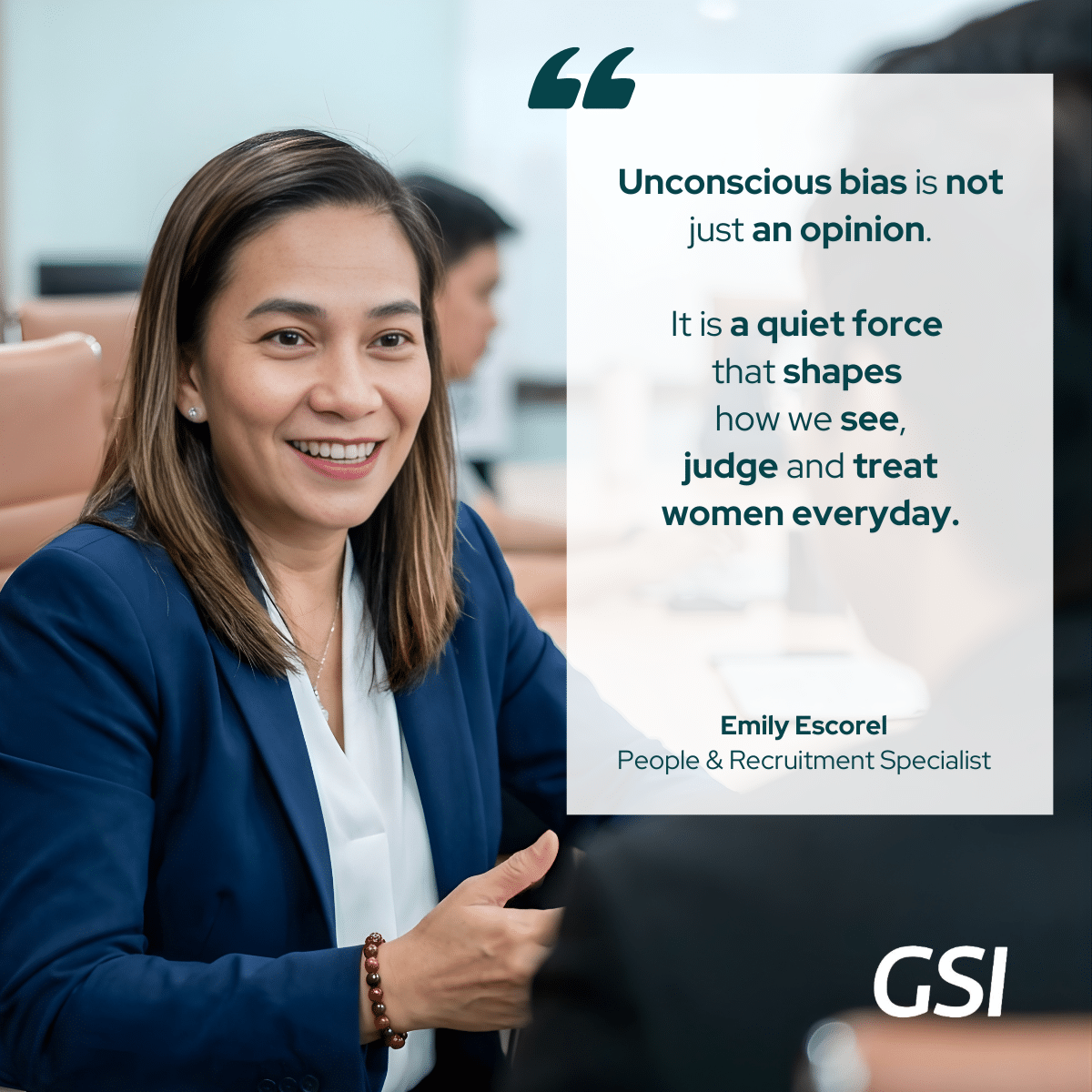
Unconscious bias in the Philippines rarely announces itself. It does not always appear in loud, dramatic moments. Instead, it lives in the quiet assumptions people make without realising it, shaped by culture, religion, family expectations, and the stories society tells about what men and women should be. According to the United Nations Development Programme’s 2023 Gender Social Norms Index, 99.5 percent of Filipinos hold at least one bias against women, a finding echoed by Esquire Philippines and GMA News. This means almost every Filipino, regardless of gender, carries internalised beliefs that influence how women are judged, valued, and treated.
These biases do not operate in isolation. They shape the tone of conversations, the decisions made in workplaces, the expectations placed on women at home, and even the way society responds to violence or injustice. They are woven into the fabric of daily life.
Bias in Judging Competence
Competence bias is the assumption that men are naturally more capable, decisive, or suited for leadership. UNDP reports that 77.81 percent of Filipinos believe men make better business executives or have more right to a job. This belief quietly influences how people interpret performance.
A woman may walk into a meeting fully prepared, only to find her ideas met with polite silence. Minutes later, a male colleague repeats the same point and receives nods of approval. When a woman succeeds, people may say she was “lucky,” “supported,” or “in the right place at the right time.” When a man succeeds, the assumption is that he earned it through skill. These subtle differences accumulate, shaping who is seen as leadership material and who is not.
Bias in Interpreting Behaviour
Behavioural bias occurs when identical behaviour is judged differently depending on who displays it. In the Philippines, women are expected to be gentle, patient, and accommodating. A woman who speaks firmly may be described as “masungit” or “may attitude,” while a man using the same tone is praised for being assertive.
This double standard is reinforced by cultural expectations around “magandang asal” and “pagiging mabait,” which are often applied more strictly to women. A woman who negotiates confidently may be criticised for being “too aggressive,” while a man doing the same is seen as strategic. These judgments shape who is taken seriously and who is dismissed.
Bias in Expectations Around Family and Work
Family role bias is the assumption that women will prioritise family over career, regardless of their actual ambitions. The GSNI shows that 43.61 percent of Filipinos believe higher education is more important for men, a belief that feeds into assumptions about long‑term commitment.
A woman may be passed over for a promotion because leaders assume she might soon start a family. A mother returning from maternity leave may be treated as if she is less dedicated, even when her performance remains strong. Meanwhile, fathers are often praised for basic parenting tasks, reinforcing the idea that caregiving is primarily a woman’s responsibility. These assumptions limit women’s opportunities long before any formal decision is made.
Bias in Political and Public Leadership
Leadership bias is the belief that men are naturally better suited for public leadership. According to UNDP, 75 percent of Filipinos believe men make better political leaders. This belief shapes how voters perceive female candidates and how media covers them.
A woman running for office may find her marital status, appearance, or tone scrutinised more than her platform. When she makes a firm decision, she may be criticised as harsh, while a male counterpart is praised for strength. These patterns discourage women from entering public life and reinforce the idea that leadership belongs to men.
Bias in Safety, Autonomy, and Victim Blaming
Physical integrity bias refers to beliefs that justify controlling women’s behaviour or excusing violence. The GSNI reports that 92.83 percent of Filipinos hold biases related to women’s bodily autonomy, one of the highest rates globally.
This bias becomes visible when victims of harassment are asked what they were wearing, why they were out late, or whether they “led someone on.” It appears when a woman is told to adjust her behaviour to avoid danger, rather than holding perpetrators accountable. These responses reveal how deeply bias shapes attitudes toward women’s safety and rights.
Bias in Everyday Language and Humour
Linguistic bias is embedded in the jokes and comments people use casually. Terms like “maarte,” “maldita,” or “hysterical” are often used to dismiss women’s emotions or opinions. Jokes about women drivers or remarks about skin colour reinforce stereotypes that limit how women are valued.
A woman who expresses frustration may be told she is “overreacting,” while a man expressing the same frustration is seen as passionate. These small comments shape how women are perceived long before they speak.
Bias in Media and Representation
Representation bias occurs when media consistently portrays women in narrow roles. Filipino television often casts women as the martyr mother, the obedient daughter, or the sexualised love interest. These portrayals influence how society expects real women to behave.
A woman who does not fit these roles may be judged harshly or misunderstood. When powerful women are portrayed as villains or threats, it reinforces the belief that ambition in women is unnatural or undesirable. These portrayals shape public perception long before people form their own opinions.
Addressing Unconscious Bias: What Society Can Do and What GSI Learned
Unconscious bias cannot be dismantled through awareness alone. It requires deliberate, sustained action at individual, organisational, and cultural levels.
One of the most effective approaches is education that challenges long‑held assumptions. When people learn to recognise double standards, they begin to question their own reactions. Media literacy also plays a role, helping audiences understand how portrayals shape expectations. Workplaces can adopt structured hiring and evaluation processes that reduce the influence of instinct and familiarity. Policies that support shared caregiving responsibilities help counter the assumption that women must carry the emotional and domestic load.
GSI’s own journey reflects these realities. As a growing organisation, we recognised that unconscious bias does not disappear simply because a company has good intentions. It must be confronted directly. We invested in gender sensitivity training, especially after incidents that revealed blind spots in our culture. We strengthened our reporting mechanisms to ensure women feel safe and supported. We introduced structured performance rubrics and cross‑functional review panels to reduce subjective judgments. We normalised flexible work arrangements for all genders and ensured that parental responsibilities do not hinder career progression. We also made deliberate choices in our branding and storytelling to portray women with dignity and agency, avoiding stereotypes and highlighting real contributions.
These steps did not eliminate bias entirely, but they created an environment where bias can be named, challenged, and corrected. They also reminded us that cultural change is not a single initiative. It is a continuous commitment to fairness, dignity, and accountability.
Paano Lumalabas ang Unconscious Bias sa Araw‑araw na Buhay ng Pilipino
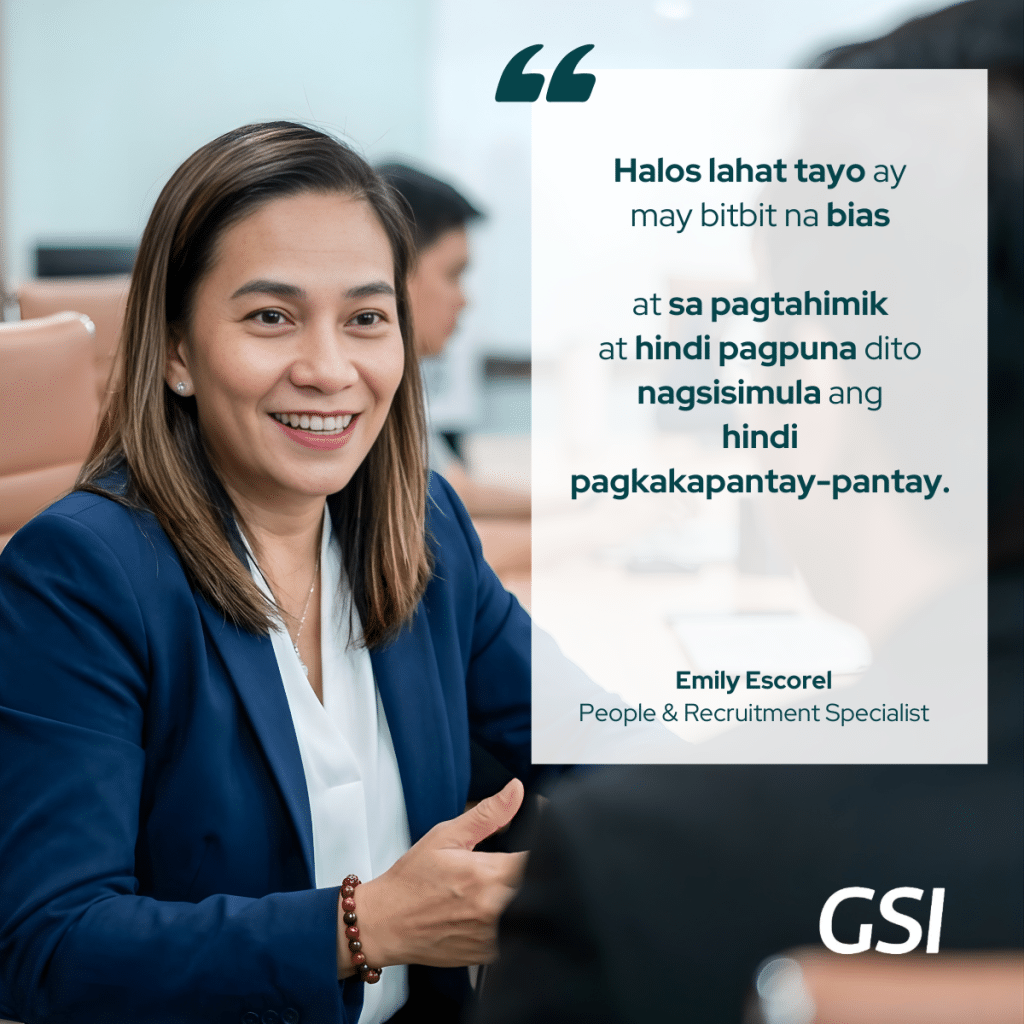
Ang unconscious bias sa Pilipinas ay hindi laging malakas ang dating. Madalas, hindi ito sigawan o lantaran. Mas madalas itong lumalabas sa maliliit na komento, sa mabilis na tingin, sa paraan ng paghusga na halos automatic na sa atin dahil sa kultura, relihiyon, pagpapalaki, at mga kwentong paulit‑ulit nating naririnig tungkol sa kung ano ang “dapat” para sa babae at lalaki.
Ayon sa United Nations Development Programme (UNDP) Gender Social Norms Index 2023, 99.5 porsiyento ng mga Pilipino ang may kahit isang bias laban sa kababaihan. Ibig sabihin, halos lahat tayo — babae man o lalaki — ay may bitbit na paniniwala na nakakaapekto sa paraan ng pagtingin at pagtrato natin sa kababaihan. Inulat din ito ng Esquire Philippines at GMA News, na parehong nagbigay-diin na ang Pilipinas ay may isa sa pinakamataas na antas ng gender bias sa buong mundo.
Hindi ito simpleng opinyon. Isa itong realidad na humuhubog sa kilos, desisyon, at kultura natin.
Bias sa Pagtingin sa Kakayahan
Ang competence bias ay ang paniniwalang mas magaling, mas natural na lider, o mas “fit” ang lalaki para sa mahahalagang posisyon. Ayon sa UNDP, 77.81 porsiyento ng mga Pilipino ang naniniwalang mas bagay sa lalaki ang mataas na posisyon o mas karapat-dapat silang kunin sa trabaho.
Makikita ito sa mga sitwasyong pamilyar sa marami: may babaeng nagbigay ng malinaw at matalinong ideya sa meeting, pero walang pumapansin. Pag inulit ng lalaking katrabaho, biglang nagkakaroon ng “ganda ng insight.” Kapag nagtagumpay ang babae, sinasabing “swerte,” “magaling ang mentor,” o “naalalayan.” Kapag lalaki, sinasabing “magaling talaga.”
Unti‑unti, ang ganitong pagtingin ang nagtatakda kung sino ang nakikita bilang “pang-leadership” at sino ang hindi.
Bias sa Pag-interpret ng Ugali
Ang behavioural bias ay lumalabas kapag magkaiba ang paghusga sa parehong kilos depende kung babae o lalaki ang gumawa. Sa Pilipinas, inaasahan ang kababaihan na maging mahinahon, magalang, at “maganda ang loob.”
Kapag ang babae ay nagsalita nang diretso, madalas tawaging “masungit,” “may attitude,” o “masyadong palaban.” Kapag lalaki ang gumawa nito, sinasabing “assertive,” “leader,” o “may conviction.”
Isang babaeng nagne-negotiate nang maayos ay puwedeng sabihing “masyadong agresibo,” pero ang lalaking nagne-negotiate ay tinatawag na “strategic.” Ang ganitong double standard ang nagtatakda kung sino ang pinakikinggan at sino ang binabalewala.
Bias sa Inaasahang Papel sa Pamilya at Trabaho
Ang family role bias ay ang paniniwalang mas uunahin ng babae ang pamilya kaysa sa career. Ayon sa GSNI, 43.61 porsiyento ng mga Pilipino ang naniniwalang mas mahalaga ang higher education para sa lalaki kaysa sa babae.
Dahil dito, may mga babaeng hindi napo-promote dahil inaakalang “baka magka-baby na,” kahit hindi naman nila ito nabanggit. May mga nanay na pagbalik mula sa maternity leave ay tinatratong parang “less committed,” kahit consistent ang performance. Samantala, ang mga tatay ay pinupuri sa mga basic na gawaing bahay — isang bagay na inaasahan sa babae.
Ang mga ganitong assumptions ay pumipigil sa kababaihan bago pa man magsimula ang totoong paghusga sa kanilang kakayahan.
Bias sa Pulitika at Pampublikong Pamumuno
Ayon sa UNDP, 75 porsiyento ng mga Pilipino ang naniniwalang mas magaling na political leader ang lalaki. Dahil dito, iba ang lente ng publiko at media sa kababaihang tumatakbo o nasa posisyon.
Kapag babae ang kandidato, mas napag-uusapan ang hitsura, tono ng boses, o buhay pag-ibig kaysa sa plataporma. Kapag matapang ang desisyon niya, sinasabing “masyadong matigas.” Kapag lalaki ang gumawa, sinasabing “strong leadership.”
Ang ganitong pananaw ang dahilan kung bakit kakaunti ang kababaihan sa pulitika — hindi dahil kulang sila sa kakayahan, kundi dahil sobra ang bigat ng bias na hinaharap nila.
Bias sa Kaligtasan, Autonomy, at Victim Blaming
Isa sa pinakamabigat na findings ng GSNI ay ang 92.83 porsiyento ng mga Pilipino ay may bias na may kinalaman sa physical integrity ng kababaihan — kabilang dito ang mga paniniwalang nagreresulta sa victim blaming at kontrol sa katawan ng babae.
Makikita ito sa mga tanong na “Ano ba ang suot mo?” “Bakit ka lumabas nang gabi?” “Bakit mo siya pinatulan?” Kapag may nangyaring harassment, madalas ang babae pa ang pinapayoang mag-ingat, magbago ng damit, o umiwas — imbes na panagutin ang gumawa.
Ito ang pinakamalinaw na patunay na ang bias ay hindi lang opinyon. Isa itong panganib.
Bias sa Wika at Humor
Nasa wika rin ang bias. Ang mga salitang “maarte,” “maldita,” “hysterical,” o “emotional” ay madalas ibinabato sa kababaihan kahit normal lang ang kanilang reaksyon. Ang mga biro tungkol sa “babaeng driver,” “babaeng selosa,” o “babaeng mahina sa math” ay nagmumukhang harmless, pero paulit-ulit nitong pinapalakas ang stereotype na mas mababa ang kakayahan ng babae.
Kapag babae ang nagpakita ng frustration, sinasabing “OA.” Kapag lalaki, sinasabing “passionate.” Sa ganitong paraan, unti-unting hinuhubog ng wika ang pagtingin natin sa kababaihan.
Bias sa Media at Representasyon
Sa telebisyon at pelikula, madalas nakakahon ang kababaihan sa ilang papel: ang martir na ina, ang tahimik na anak, ang selosang girlfriend, o ang sexualized na love interest. Dahil dito, nagkakaroon ng limitadong imahen kung ano ang “tamang” babae.
Kapag may babaeng hindi pasok sa stereotype — halimbawa, diretso magsalita, ambisyosa, o independent — madalas siyang husgahan bilang “masama ang ugali” o “nakakatakot.” Ang media ang unang nagtuturo kung ano ang “normal,” kaya malaki ang epekto nito sa paghubog ng bias.
Paano Ito Ina-address: Sa Lipunan at sa Loob ng GSI
Ang unconscious bias ay hindi nawawala sa simpleng awareness. Kailangan itong harapin nang direkta at tuloy-tuloy.
Sa mas malawak na lipunan, malaking tulong ang edukasyon na naglalantad ng double standards. Kapag natutunan ng tao na tanungin ang sarili kung patas ba ang kanilang reaksyon, nagsisimula ang pagbabago. Mahalaga rin ang media literacy, dahil ang mga pinapanood at binabasa natin ang unang nagtatakda ng “normal.” Sa mga opisina, nakakatulong ang malinaw na proseso sa hiring at promotion para mabawasan ang personal bias. At sa mga pamilya, ang pantay na pagtrato sa responsibilidad sa bahay ay unti-unting nagbabago ng pananaw tungkol sa papel ng babae at lalaki.
Sa loob ng GSI, dumaan din kami sa sariling proseso ng pagharap sa unconscious bias. Hindi sapat ang “magandang intensyon.” Kailangan ng malinaw na aksyon. Nagpatupad kami ng gender sensitivity training, lalo na matapos ang ilang insidenteng nagpakita ng blind spots sa kultura namin. Pinalakas namin ang reporting mechanisms para masigurong ligtas at naririnig ang kababaihan. Gumamit kami ng structured performance rubrics at cross-functional review panels para mabawasan ang subjective na paghusga. Ginawa naming normal ang flexible work arrangements para sa lahat, hindi lang sa kababaihan. At sinadya naming baguhin ang paraan ng pagku-kuwento sa aming branding — mas dignified, mas totoo, mas may agency ang kababaihan.
Hindi pa tapos ang proseso. Pero mas malinaw na ngayon ang direksyon: isang organisasyong may malasakit, may integridad, at may kakayahang kilalanin at itama ang sariling pagkukulang.